
Precision. Innovation. Impact.

Accelerating the
Future of Bioprinting

FelixBio develops advanced bioprinting solutions that empower researchers and innovators to engineer living tissues and transform human health.
Trusted by Leading Research Institutions


Applications

Designed for Breakthroughs

Tissue Engineering
Build functional tissues and scaffolds that mimic native microenvironments.
Drug Discovery
Accelerate screening and testing with physiologically relevant 3D models.
Regenerative Medicine
Advance cell-based therapies and regenerative solutions.
Organ-on-a-Chip
Create dynamic micro-physiological systems for real-world insights.
Biomaterials
Develop and test next-gen biomaterials with precision and reproducibility.
Disease Modeling
Model diseases in 3D to understand mechanisms and evaluate therapies.

Engineered for Precision

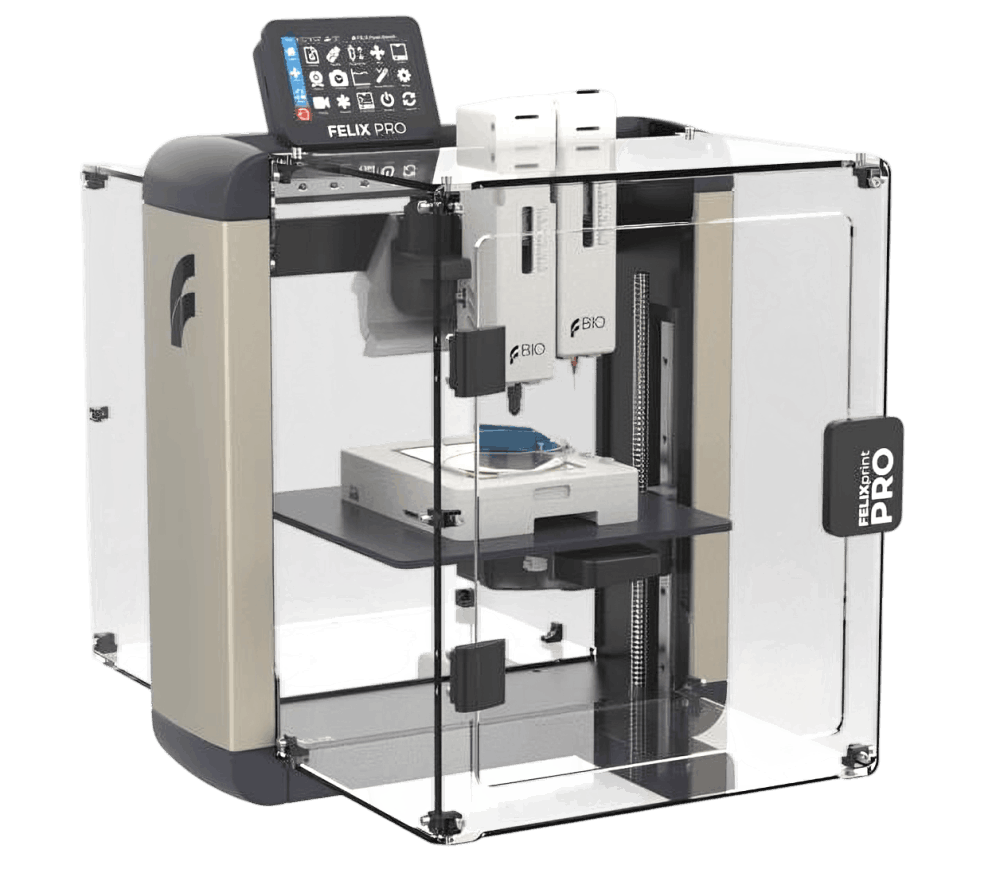
BIOprinter Key Features

Every detail of the BIOprinter is designed to deliver precision, reliability, and flexibility.

Dual Printhead System
Print multiple materials simultaneously with high accuracy.
Syringe Temperature Control
Maintain optimal material properties with precise heating from 4°C to 75°C.
Touchscreen Interface
Intuitive 10" touchscreen for seamless control and monitoring.
Integrated Webcam
Real-time monitoring and timelapse recording of every print.
UV Sterilization Module
Maintain a sterile environment for reliable bioprinting results.
Modular Design
Customizable modules to adapt to your evolving research needs.
1,200+
Installations Worldwide
50+
Countries
300+
Research Publications
98%
Customer Satisfaction

Latest Research Highlights

nature
biotechnology
Nature Biotechnology
May 2024
Bioprinted vascularized tissue constructs for enhanced graft integration
Read Article
Science
Advances
Science Advances
Apr 2024
High-throughput bioprinting platform for drug screening
Read Article
Advanced
Materials
Advanced Materials
Feb 2024
A novel bioink for printing mechanically robust living tissues
Read Article
npj
Regen.
Medicine
npj Regenerative Medicine
Jan 2024
Patient-derived models for personalized disease modeling
Read Article